
What fiscalisation is
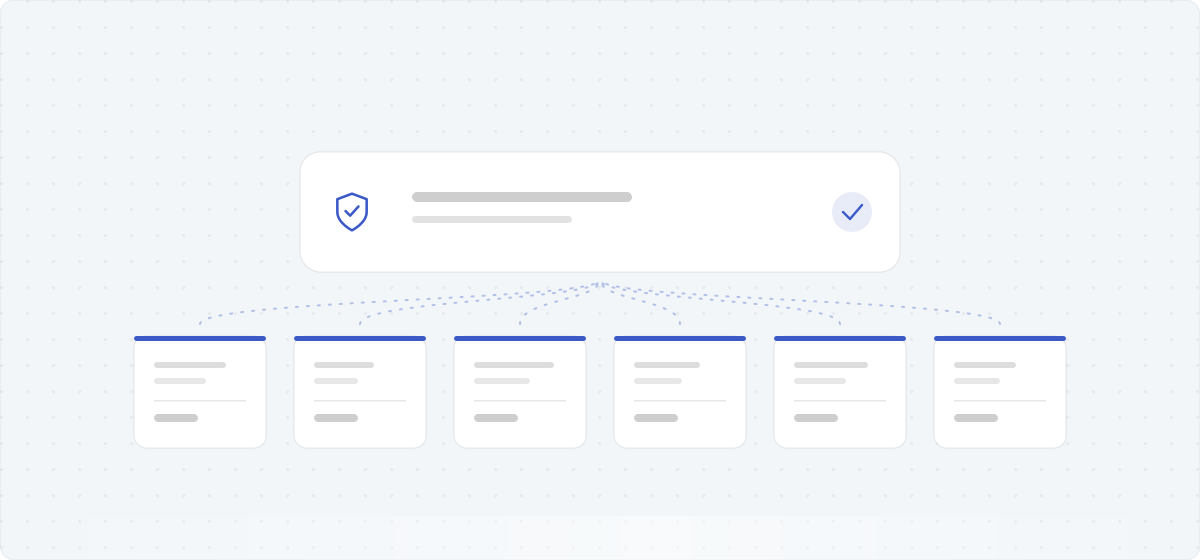
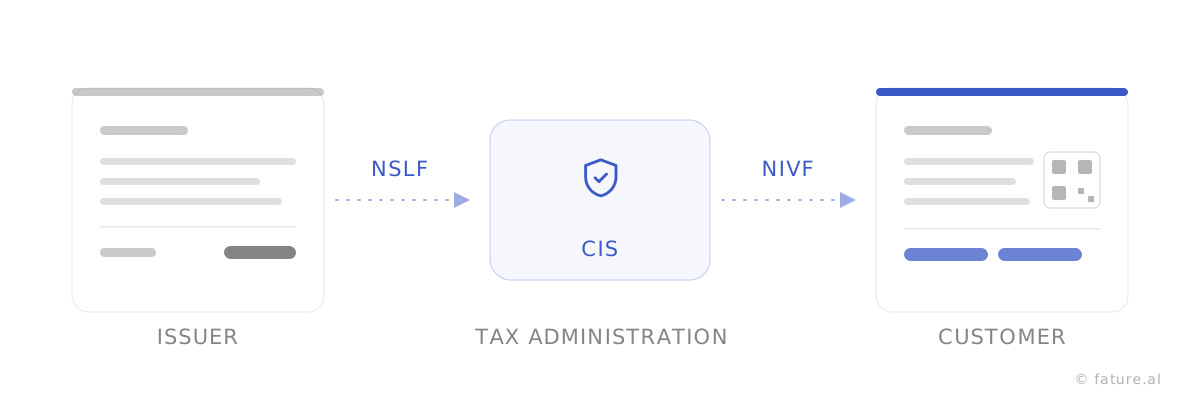
Albania runs a clearance model. An invoice is not reported after the fact and it is not batched into a periodic file. It is sent to the tax administration at the moment it is issued, validated there, and returned with an identification code, all before the document is handed to the customer. An invoice that has not come back cleared is not a valid invoice.
Locally the system is called fiskalizimi. It is operated by the General Directorate of Taxes through a platform known as the Central Information System, usually shortened to CIS. Every business that issues invoices in Albania is inside it, from a single till in a village shop to a subsidiary of a multinational.
The scope is wider than the term e-invoicing suggests in most European countries. It is not only structured B2B documents. A receipt for a coffee paid in cash goes through the same clearance as a six figure B2B invoice, which is why the local requirements below apply to far more businesses than a European reader would expect.
The law and the timeline
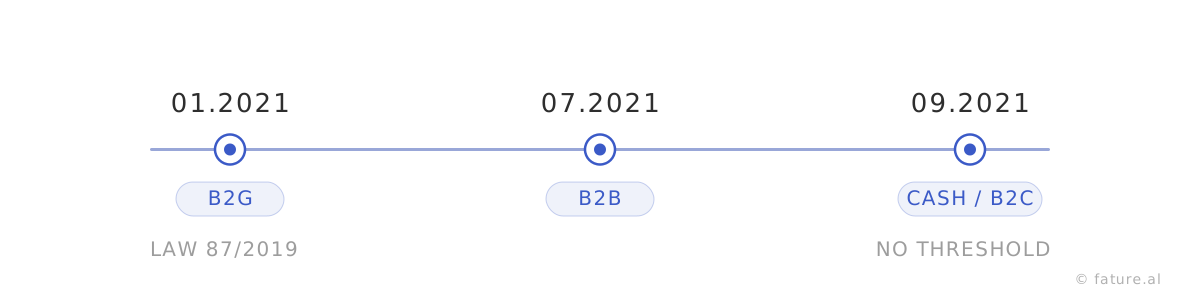
The system rests on Law no. 87/2019, on invoicing and the turnover monitoring system. It was introduced in three stages, and all of them are long since in force:
| Date | Scope |
|---|---|
| 1 January 2021 | Business to government transactions |
| 1 July 2021 | Business to business non-cash transactions |
| 1 September 2021 | All cash transactions, including business to consumer |
There is no turnover threshold and no small business exemption. A newly registered sole trader is inside the system from its first sale.
Certified software is mandatory
This is the requirement most international country guides omit, and it is the one that decides whether a business can trade.
A company cannot connect to the Central Information System by itself. The software that issues invoices has to pass certification run by the National Agency for Information Society, known by its Albanian initials as AKSHI, and the tax administration publishes the resulting list of certified subjects. Certification is granted per solution and records which document types that solution is allowed to issue.
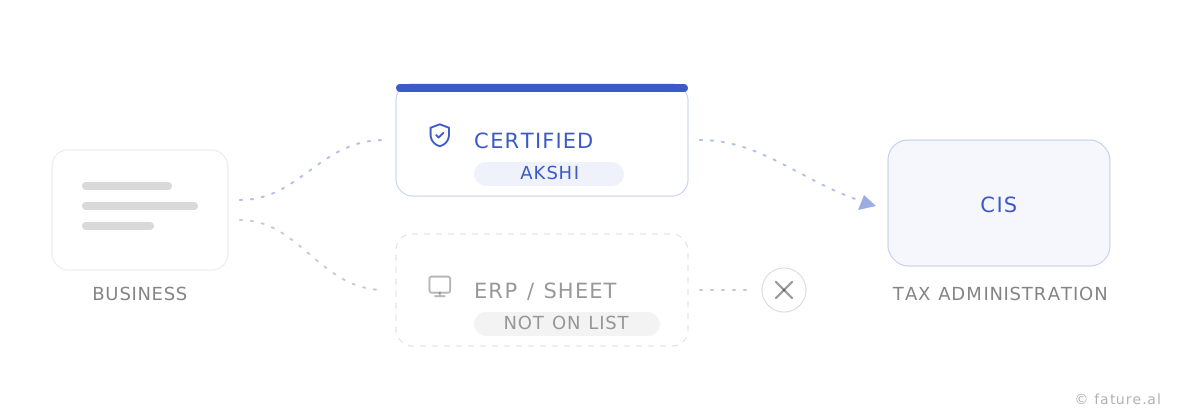
The published list is here: list of certified subjects, tatime.gov.al. fature.al appears on it under the entity that operates it, Ei3 Software Solution shpk, VAT number L62221018T.
The practical consequence for a foreign reader is worth stating plainly. A global invoicing platform, a Peppol access point or an ERP connector cannot register an Albanian invoice on a company's behalf, however well it handles the format. The message has to be signed with the taxpayer's own certificate and submitted by software that the Albanian authorities have certified.
The four document types
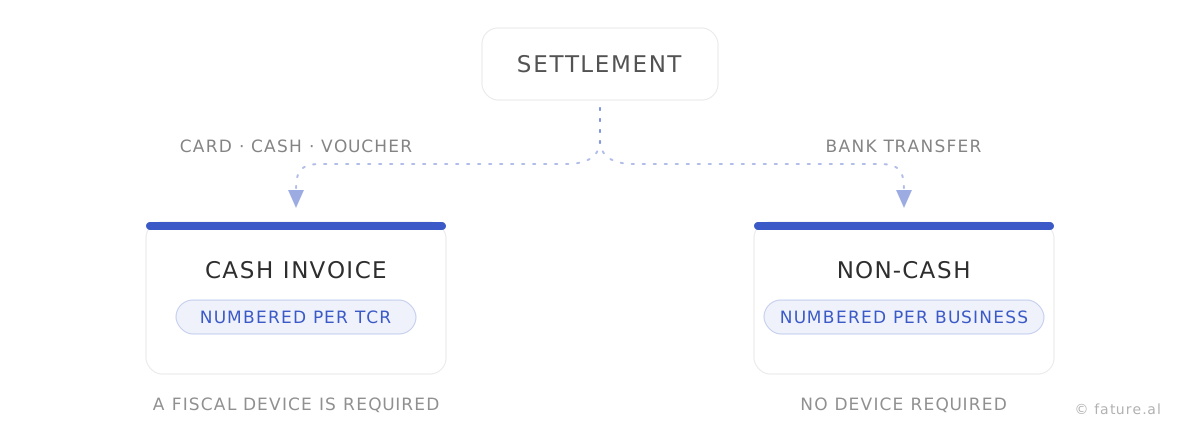
Albanian fiscalisation does not split documents by who the customer is. It splits them by how the invoice is settled, which catches out anyone mapping the rules from another country. A card payment is a cash transaction here.
| Document | When it applies | How it is numbered |
|---|---|---|
| Cash invoice | Settled at the point of sale: banknotes, card, voucher or cash on delivery | Per fiscal device, the TCR |
| Non-cash invoice | Settled by bank transfer, typically between businesses | Per business, not per device |
| Electronic invoice | Structured invoice exchanged through the central platform, always for public bodies | Per business |
| Transport document | Movement of goods, cleared before the goods leave | Per business unit |
Electronic invoices are carried as structured XML, in UBL 2.1 or UN/CEFACT. Cash and non-cash invoices are cleared through the fiscalisation service rather than exchanged as a document, which is why a business can be fully compliant without ever producing a UBL file.
Printing a cash invoice on paper is compulsory, with a narrow exception for electronic services and for goods ordered through an app or an online shop, where the invoice may be sent to the buyer electronically instead.
NIVF, NSLF and the QR code
Two codes identify every fiscalised invoice, and they come from opposite ends of the exchange.
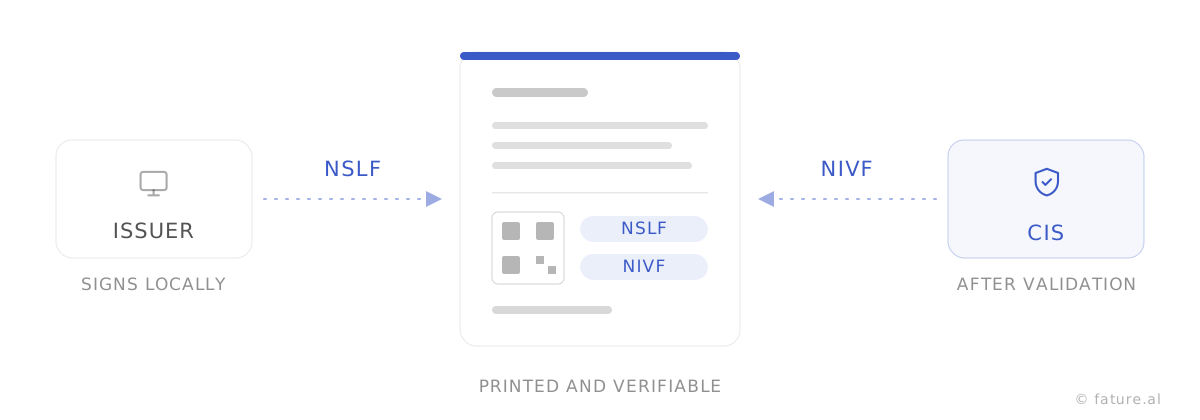
NSLF, the issuer security number, is generated by the issuing software and signed with the taxpayer's electronic certificate. It establishes that this invoice was produced by this issuer.
NIVF, the unique invoice identification number, is generated by the tax administration's system and returned once the invoice has passed every validation. It is the proof that the invoice is registered.
Both codes are printed on the invoice, together with a QR code. Anyone holding the printed invoice can scan it and check on the tax administration's own site that the document exists and matches what is printed. Transport documents carry the same pair under the names NIVFSH and NSLFSH.
What a business needs before it can invoice
Five registrations stand between a newly incorporated Albanian company and its first legal invoice. Four of them are done by the taxpayer, not by the software vendor.
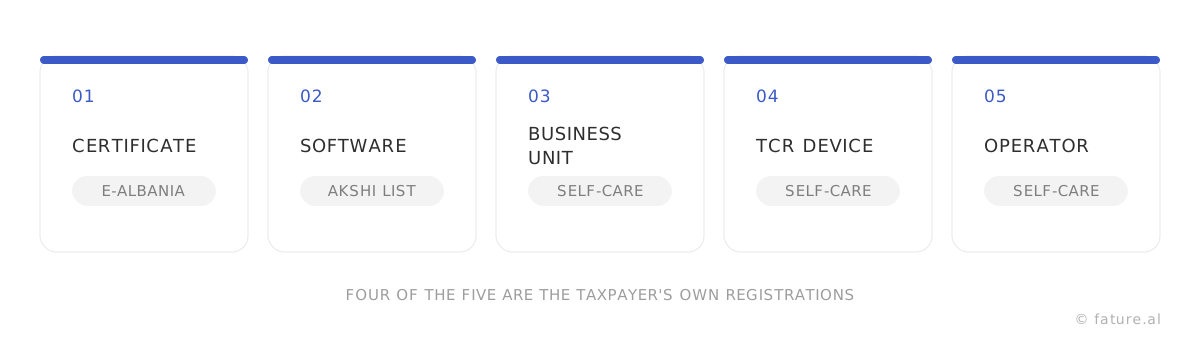
- An electronic certificate. Issued through the government portal e-albania.al against the business VAT number. Every message sent to the fiscalisation service is signed with it, so it is the root of the whole chain. It expires and has to be renewed.
- Certified software from the published list, as described above.
- A business unit code for each place of activity, declared in the central Self-Care platform. The legal definition is broad: fixed premises, but also vending machines, market stalls, vehicles used to supply goods, work carried out at the customer's site when it is paid in cash, and online trade, which is a business unit type of its own.
- A fiscal device, the TCR, for every point of sale that takes cash transactions. Each device is registered against one business unit, and cash invoice numbering runs per device.
- An operator code for each employee who issues invoices, also obtained from Self-Care. The code identifies the individual on every invoice they issue.
A business that sells only by bank transfer needs the certificate, the software and a business unit, but no fiscal device. The moment it accepts a card, the device becomes compulsory.
VAT inside the system
The standard VAT rate in Albania is 20 percent, with reduced rates of 10 and 6 percent for specific supplies. VAT is not reported separately from fiscalisation: the rate, the taxable base and the VAT amount for every line travel to the Central Information System with the invoice itself.
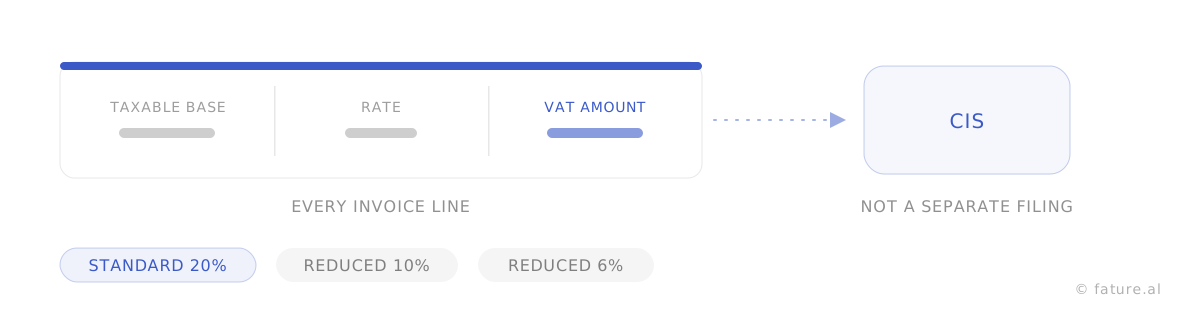
That is the point of the whole design. The tax administration holds the invoice level detail of the entire economy as it happens, rather than a summary at the end of a period, and the VAT position of a business is assembled from documents it has already cleared.
Foreign companies with an Albanian entity
The obligation follows the Albanian entity, not the group. If a multinational has a subsidiary, a branch or a permanent establishment in Albania that issues invoices, that entity is inside fiscalisation on the same terms as a local company.
The part that cannot be centralised is the part that is registered in Albania. The electronic certificate belongs to the Albanian entity. The fiscal devices are registered to its business units. The operator codes belong to people employed by it. A group platform in Amsterdam or Milan can hold the commercial truth of the transaction, but it cannot hold those registrations.
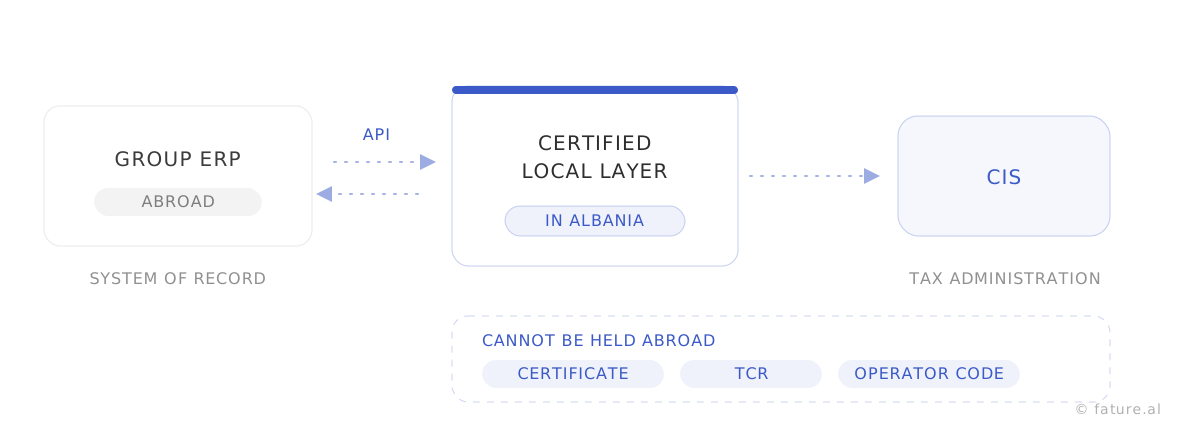
The arrangement that works in practice keeps the group ERP as the system of record and gives the fiscalisation leg to certified local software, connected over an API so nothing is typed twice. Invoices are created where they are already created, cleared where they must be cleared, and the identification codes come back into the group system.
When the connection drops
Clearance happens in real time, but the law does not stop a business trading when the internet does. A sale continues, the invoice is issued and stored, and it must reach the tax administration within 48 hours of the connection being restored.
A broken fiscal device is treated separately. The taxpayer has five days from the failure to repair the device or replace it with a new one.
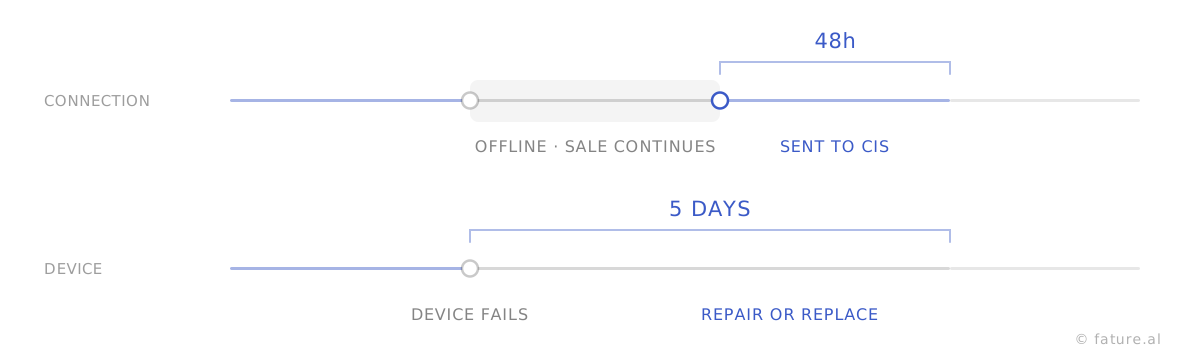
For anyone evaluating software, this is the detail worth testing. A system that simply refuses to sell when the clearance call times out is not compliant behaviour, it is a closed shop.
Corrections and cancellations
A fiscalised invoice cannot be deleted, edited or withdrawn. Albanian law has no concept of cancelling a registered invoice, because the document has already reached the tax administration.
What exists instead is the corrective invoice. It references the original invoice by its identification number, is cleared through the same service, and carries negative values when the original is being reversed in full. Partial corrections adjust only the lines concerned.

Anyone mapping an ERP's credit note logic onto Albania should start here, because the reference to the original document is mandatory and a free standing credit note will not clear.
Frequently asked questions
Can a company submit invoices to the Albanian system on its own?
No. Invoices reach the Central Information System through software that has been certified for fiscalisation, and the tax administration publishes the list of certified providers. A generic ERP connector or a spreadsheet cannot register an invoice, because the message has to be signed with the taxpayer certificate and formed exactly as the fiscalisation service expects.
Is a card payment treated as cash or as non-cash?
As cash. Albanian fiscalisation splits invoices by settlement method rather than by banknotes, so card, voucher and cash on delivery are all cash transactions and are numbered against a fiscal device. Only a bank transfer makes an invoice non-cash.
Does a purely online business still need a fiscal device?
Yes, if it accepts card payments or cash on delivery, because both are cash transactions. Online trade is its own type of business unit, declared in the Self-Care platform with its own code, and the fiscal device is registered against it.
What is the difference between NIVF and NSLF?
NSLF is generated by the issuing software and proves the invoice came from that issuer. NIVF is returned by the Central Information System once the invoice passes validation and proves the invoice is registered with the tax administration. Both are printed on the invoice.
Can a fiscalised invoice be cancelled?
Not by deleting it. Albanian law has no cancellation of a registered invoice. The invoice is corrected by a corrective invoice that references the original and carries negative values when the whole document is reversed.
What happens if the internet goes down during a sale?
The sale continues and the invoice is stored locally. It must be sent to the tax administration within 48 hours of the connection being restored. If the fiscal device itself fails, it has to be repaired or replaced within five days.
Does a foreign parent company need an Albanian solution for its subsidiary?
In practice yes. The obligation sits with the Albanian entity, and both the electronic certificate and the fiscal device are registrations made in Albania against that entity. A group platform can remain the system of record, but the fiscalisation leg has to run through certified local software.
Where fature.al fits
fature.al is invoicing and fiscalisation software built for Albania, operated by Ei3 Software Solution shpk, VAT number L62221018T, listed among the certified subjects published by the tax administration. It issues all four document types, manages the electronic certificate and the XML signing, and keeps selling when the connection to the central platform is unavailable.
Everything above is available over a REST API, which is what a foreign parent normally needs: the group system keeps issuing invoices, and the Albanian clearance leg, the identification codes and the printed document are handled locally. The interface is available in Albanian, English, Italian and German.
If you are researching Albania for a client, a country guide or a market entry, we are happy to answer technical questions about how the system behaves in production, whether or not anything commercial follows. Write to [email protected].