
Why the same errors travel
Albania publishes its fiscalisation rules in Albanian. The law, the instructions issued under it and the technical documentation for the Central Information System are all local language documents, and there is no official English edition. Every international guide to the Albanian mandate is therefore written from another international guide, and once a mistake enters that chain it is copied rather than checked.
We are a fiscalisation provider certified by the Albanian General Directorate of Taxes, and we clear invoices through this system every day. What follows is the list of claims we keep reading about our own market that are not true, with the correct position and where to verify it. If you maintain a country page for Albania, treat this as maintenance offered for free.
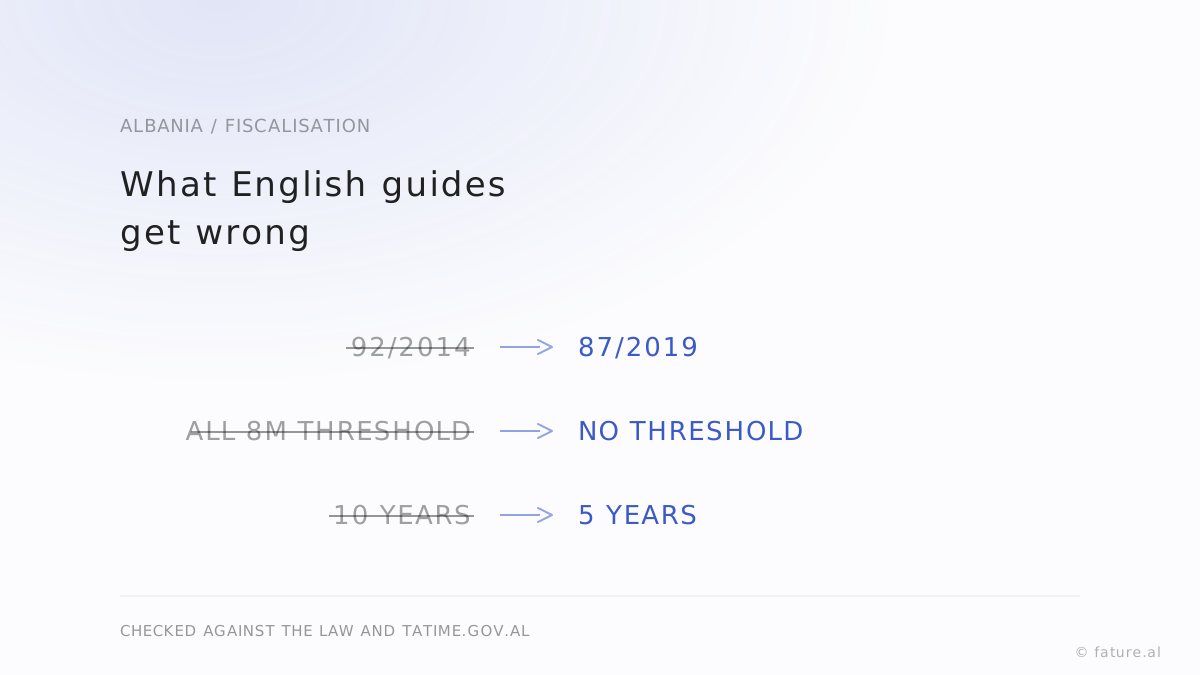
1. The law is 87/2019, not 92/2014
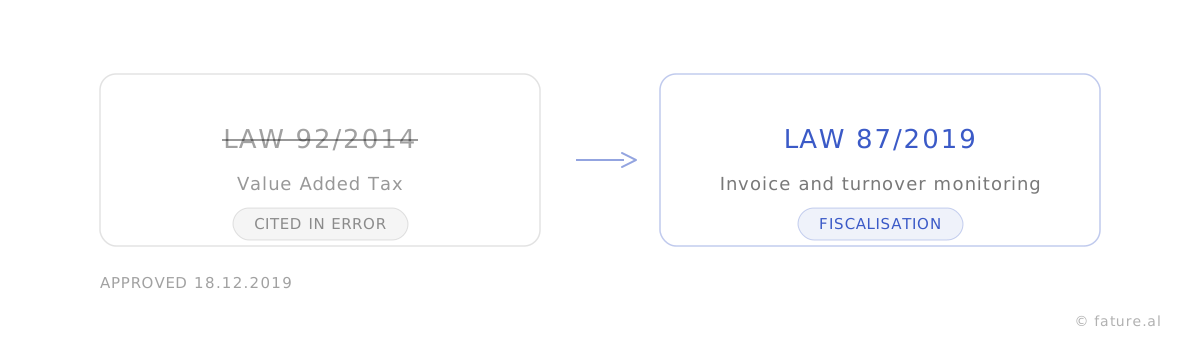
A surprising number of English pages cite Law no. 92/2014 as the basis for Albanian e-invoicing. Law 92/2014 is the Albanian value added tax law. It has nothing to do with fiscalisation.
The framework is Law no. 87/2019, on the invoice and the turnover monitoring system, approved on 18 December 2019, together with the instructions and ministerial orders issued under it. Anything describing the clearance obligation should cite that.
2. There is no turnover threshold
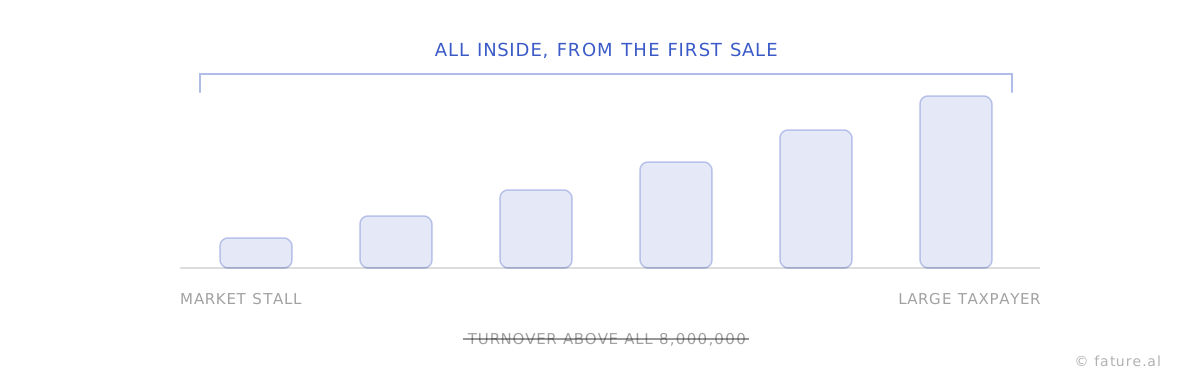
The claim that fiscalisation applies above ALL 8 million of annual turnover, and is voluntary below it, appears in several guides. It is wrong in both halves.
Fiscalisation has no turnover threshold and no small business exemption. A business is inside the system from its first sale, whether or not it is registered for VAT. The figure that does exist is the VAT registration threshold, which is a separate rule under a separate law and stands at ALL 10 million. ALL 8 million was its earlier value, which is probably how the two became confused.
3. The rollout was three stages in 2021
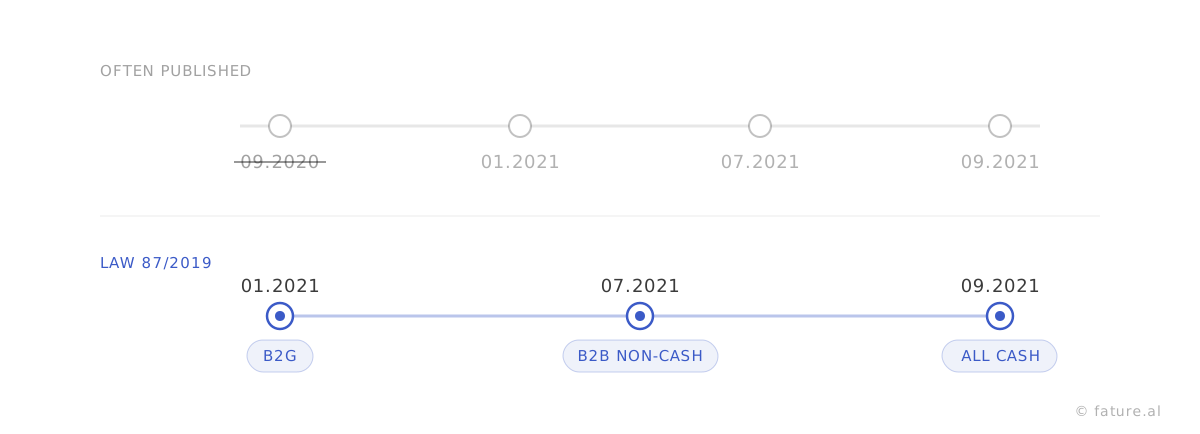
Timelines with a September 2020 first phase are common. That date was the original plan and it was superseded. The rollout that actually happened had three stages, all in 2021:
- 1 January 2021, transactions with public bodies.
- 1 July 2021, non-cash transactions between businesses.
- 1 September 2021, all cash transactions, including business to consumer.
The distinction that matters is not who the customer is but how the invoice is settled. A card payment is a cash transaction in Albania, which is the single rule most often mapped wrongly from another country.
4. Retention is five years, not ten
Ten years appears in older English write-ups. The retention obligation is five years, counted from the year following issuance. Where a ten year figure is correct it belongs to a different obligation, not to fiscalised invoices.
5. The platform is not efaktura.al
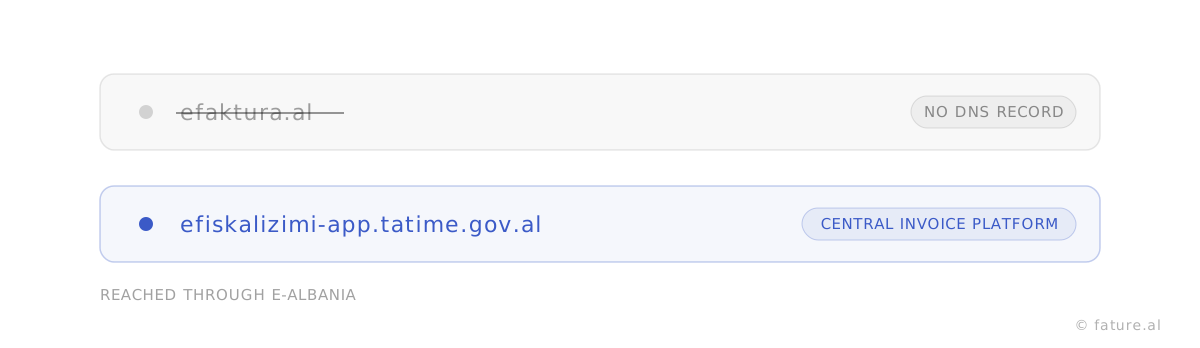
Several guides name "EFaktura.al" as the tax administration's central platform. That hostname does not resolve. There is no DNS record for it, which is easy to confirm from any machine.
The Central Invoice Platform is at efiskalizimi-app.tatime.gov.al, reached
through the government portal e-Albania. The same platform carries the Self-Care section
where a business registers its business units, its fiscal devices and the operator codes of
the people who issue invoices.
6. Certified software is the rule, not a detail
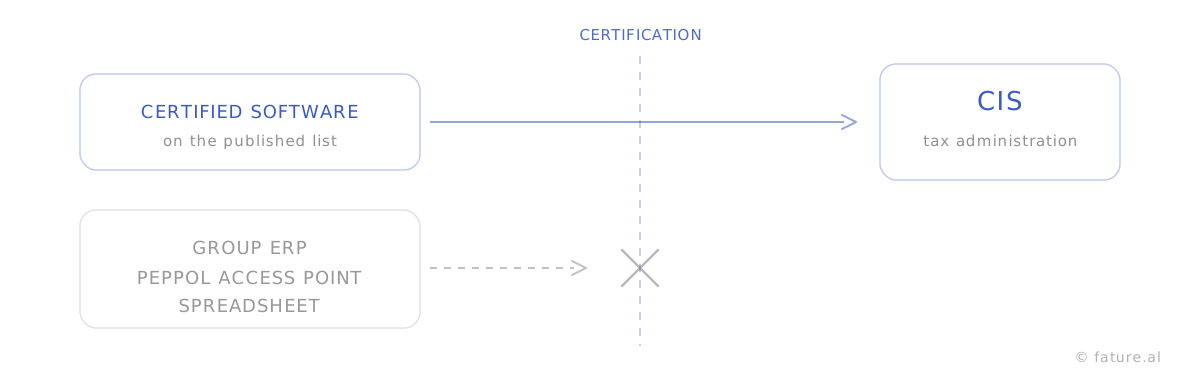
This is the most consequential omission, and almost every English page makes it. Guides mention "certified software" in passing, as though it were a recommendation. It is the gate.
A business cannot submit to the Central Information System by any other route. The software that issues invoices has to pass certification run by the National Agency for Information Society, known locally as AKSHI, and the tax administration publishes the resulting list of certified subjects. A global invoicing platform, a Peppol access point or an ERP connector cannot register an Albanian invoice on a company's behalf, however well it handles the format, because the message is signed with the taxpayer's own certificate and submitted by software the Albanian authorities have certified.
For a reader with an Albanian subsidiary this is the whole project, and a page that leaves it out sends them away thinking the problem is a file format.
7. NIVF is half of a pair
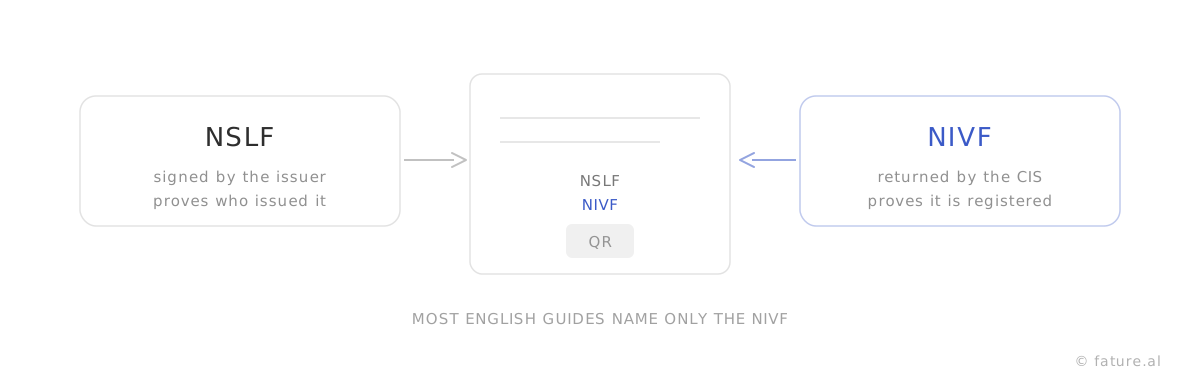
Guides that get this far name the NIVF and stop. There are two codes, and they come from opposite ends of the exchange.
NSLF is generated by the issuing software and signed with the taxpayer's electronic certificate. It proves the invoice was produced by that issuer. NIVF is generated by the tax administration's system and returned once the invoice has passed validation. It proves the invoice is registered. Both are printed on the invoice next to a QR code, and anyone holding the printed document can scan it and check it against the tax administration's own site. Transport documents carry the same pair under the names NIVFSH and NSLFSH.
8. Offline is 48 hours, and a broken device is five days
"Transmit as soon as connectivity is restored" is the usual phrasing. The rule is more precise than that, and the precision is what a business needs.
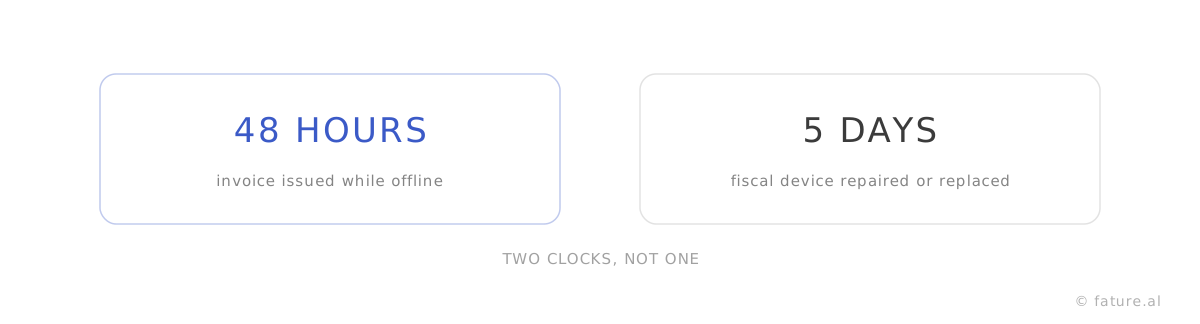
An invoice issued while the connection is down must reach the tax administration within 48 hours of the connection being restored. A failed fiscal device runs on a separate clock: the taxpayer has five days to repair it or replace it. Trading does not stop in either case, which is the point. Software that refuses to sell when the clearance call times out is not being careful, it is closed for business.
9. Nothing can be cancelled
Most guides say nothing about corrections at all, and the ones that do describe a credit note as though Albania worked like the country the author is writing from.
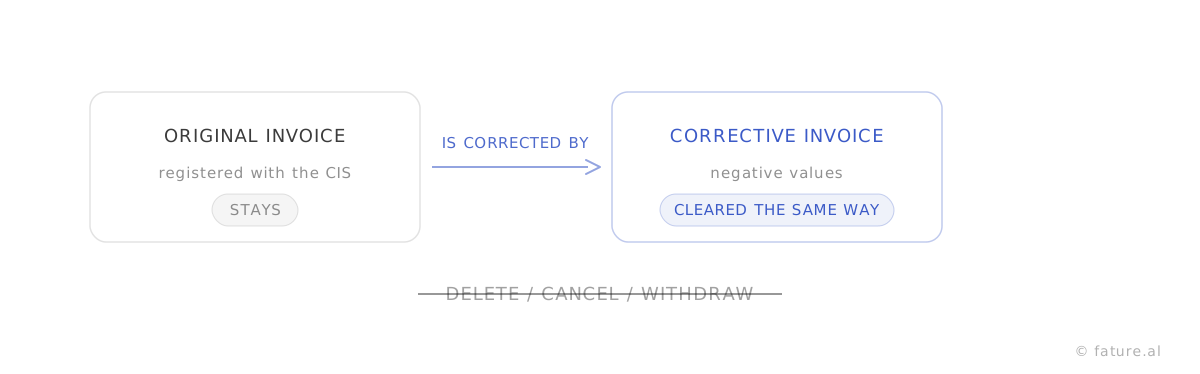
A fiscalised invoice cannot be deleted, edited or withdrawn. Albanian law has no concept of cancelling a registered invoice, because the document has already reached the tax administration. What exists instead is the corrective invoice: it references the original invoice by its identification number, is cleared through the same service, and carries negative values when the original is being reversed in full. A free standing credit note with no reference to the original will not clear.
Sources
Everything above can be checked without reading Albanian, except the law itself.
- Law no. 87/2019, on the invoice and the turnover monitoring system, and the instructions issued under it: tatime.gov.al, fiscalisation.
- The list of certified subjects: tatime.gov.al, certified subjects. fature.al appears on it under Ei3 Software Solution shpk, VAT number L62221018T.
- The Central Invoice Platform: efiskalizimi-app.tatime.gov.al.
- The background to all of it, in English: Albania e-invoicing and fiscalisation, a complete guide.